
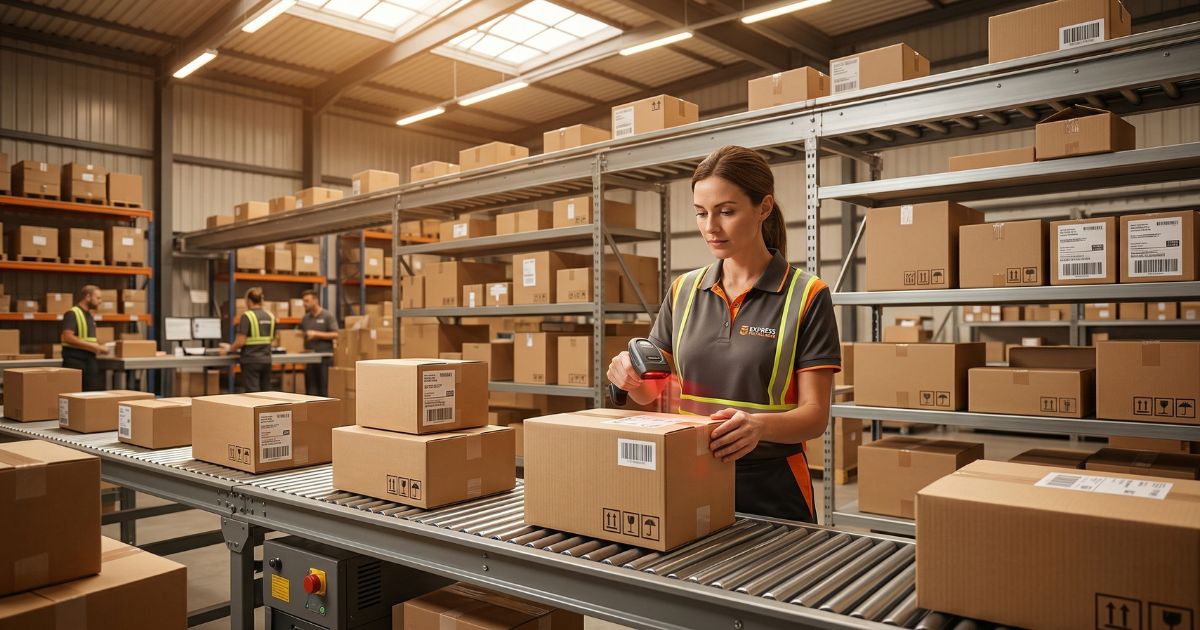
The Growth of E-Commerce and What It Means for Warehouse Scanning
E-Commerce Is Booming. Is Your Warehouse Scanning Setup Keeping Up?
Somewhere between the rise of two-day shipping and the expectation of same-day delivery, the warehouse became the most pressured link in the entire retail chain. The demand is real and growing fast — and the scanning infrastructure that was perfectly adequate three years ago may be the operational bottleneck holding you back today.
This article looks at what the e-commerce boom actually means for warehouse scanning operations: where the pressure is concentrated, what it's doing to traditional workflows, and what the smarter operations are doing about it.
E-Commerce by the Numbers: How Big Is This Really?
The growth figures are large enough to be hard to conceptualize, so let's ground them in current data.
- $6.4T+
Global e-commerce sales in 2025, up from approximately $5.8 trillion in 2023 — roughly a 10% increase in two years (Source: Shopify/eMarketer, 2025)
- 20.5%
Share of total global retail sales now happening online, projected to reach 22.5% by 2028 (Source: Shopify, 2025)
- 7.8%
Projected annual growth rate for global e-commerce through 2027 (Source: Oberlo, 2025)
- $8T+
Where global e-commerce is expected to land by 2027–2028 if current trajectories hold
These aren't abstract projections for someone else's business. They represent a sustained increase in order volumes that flow through fulfillment centers and warehouse operations of all sizes. Every percentage point of growth in online retail sales translates directly into more packages being picked, scanned, packed, and shipped.
Speed Is the New Standard
When Amazon introduced two-day shipping as a standard expectation, it didn't just change consumer behavior — it changed the operational requirements for every fulfillment operation trying to compete in the same market.
Same-day and next-day delivery windows are no longer premium exceptions. For a growing share of product categories, they're the baseline. And that timeline pressure doesn't stay at the front door — it ripples back through the entire pick-pack-ship sequence.
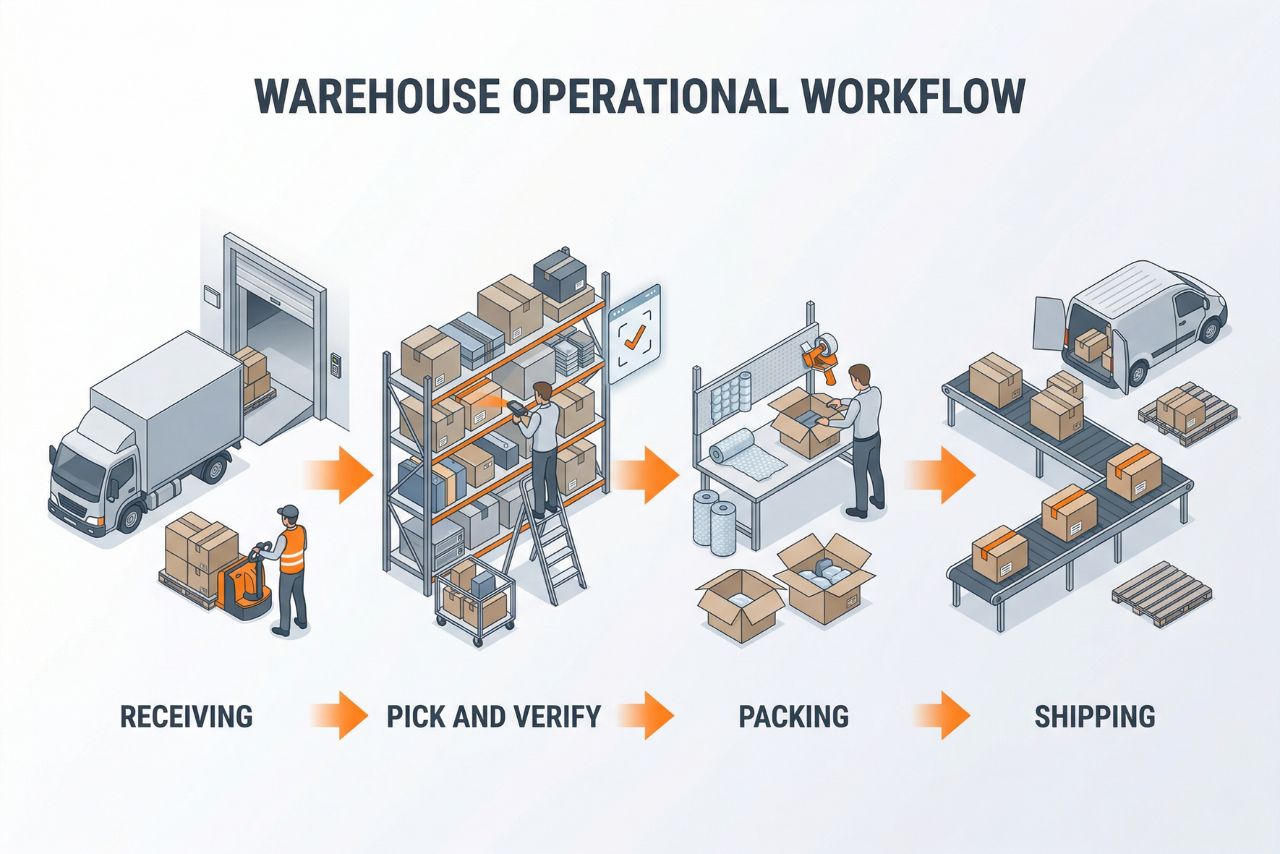
What this means operationally
A warehouse that runs a two-hour pick cycle might have been fine when orders shipped in 48 hours. In a same-day environment, that same cycle is a structural problem. Operations have responded by reducing pick travel distance through smarter slotting, introducing zone picking and batch processing, and upgrading scanning hardware to reduce per-scan time and error rates.
When you're scanning 5,000 items per shift, the difference between a scanner that reads a barcode in 80 milliseconds and one that reads it in 300 milliseconds starts to matter. Scan speed, decode reliability on low-quality codes, and the ergonomics of a device used continuously for 8 hours — all have measurable impact on throughput.
The Scanning Bottleneck: Where Operations Break Down
Most warehouse scanning problems don't show up as obvious equipment failures. They show up as subtle friction that compounds across hundreds of daily transactions.
Receiving
Inbound shipments need to be verified quickly and accurately. When scanner performance is inconsistent — struggling with angled labels, low-contrast codes, or varying distances — receiving slows down and errors slip through. A misscanned SKU at receiving creates downstream problems that are expensive to unwind.
Pick and verify
This is the highest-frequency scanning point in most operations. An operation running 1,000 picks per shift that loses 2 seconds per scan is losing over 30 minutes of productive time daily — per operator.
Pack and ship
Final verification scans before dispatch are critical error-catching points. A miss here means a wrong item ships. The hardware at this stage needs to be reliable enough to function as the last line of defense.
What Modern Warehouse Scanning Looks Like
The operations that handle high e-commerce volumes well tend to have a few things in common in how they've approached scanning infrastructure.
Upgraded handheld hardware
Older corded scanners get replaced with wireless handheld units that connect to the WMS in real time. Workers get confirmation or exception alerts immediately rather than discovering errors later.
Wearable scanners for high-frequency picking
Ring-style scanners worn on the finger free up both hands for picking and packing. In a high-SKU environment where an operator is reaching into shelves continuously, not having to pick up and put down a handheld scanner is a meaningful productivity gain.
Fixed-mount scanning at conveyor points
For operations running conveyor-based sortation or high-speed shipping label verification, fixed-mount imagers that automatically read codes as items pass through remove the human element from those verification steps.
Better device management
High-volume operations can't afford scanner downtime. Modern device management means having spare batteries charged and ready, and being able to quickly replace failing units before they create a shift-level problem.
What to Look for When Upgrading Your Scanning Setup
If you're evaluating scanning hardware for a high-volume fulfillment environment, here are the specifications that actually matter:
- Decode speed and reliability on real-world label quality — not just clean test codes in a sales demo
- Drop-test rating appropriate for your floor type (concrete floors at 1.5–1.8 meters is standard for serious industrial environments)
- Battery life that matches your shift length, plus swap time tolerance
- Real-time wireless connectivity that integrates cleanly with your WMS
- Ergonomics for sustained use — weight, grip design, and trigger placement all matter for hours of continuous use
- Repair turnaround time and local service availability — what happens when a device fails during peak season?
For a full breakdown of how to evaluate these factors in a structured way, the Buyer's Guide section of this site walks through each criterion in detail.
The Pressure Isn't Going Away — But the Right Tools Help
E-commerce volumes aren't going to plateau. Consumer expectations for delivery speed will keep tightening. The operations that handle this well aren't necessarily the biggest or the most automated — they're the ones that have matched their scanning infrastructure to the actual demands of their workflow.
Getting that match right isn't complicated. It requires asking the right questions about your environment, your volumes, and your integration requirements before selecting hardware. That investment in evaluation time pays for itself quickly when the alternative is a scanning setup that creates friction at every step of your busiest days.